


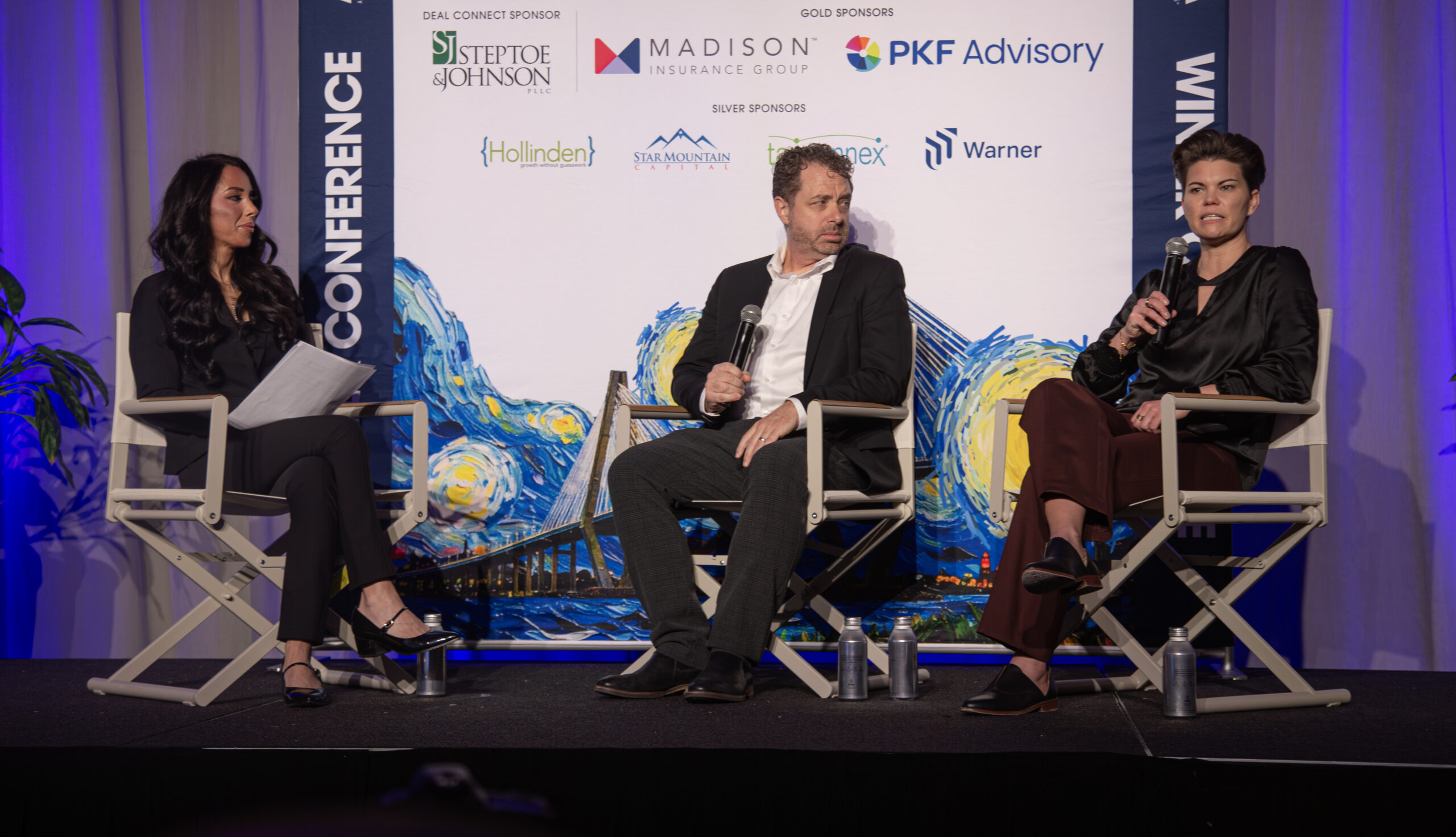
In a recent panel, AMAA Winter Conference panelists explored how brand alignment and digital ownership can accelerate diligence, reduce risk, and protect deal value for middle-market companies.
At this year’s AMAA Winter Conference in Charleston, South Carolina, which unfolded on January 19-20, one featured panel explored branding and digital readiness in today’s M&A environment. The discussion was moderated by Lindsey Wendler, Managing Director at 414 Capital, an international middle-market investment bank focused on founder- and family-owned businesses.
Joining Wendler were two industry experts with deep transaction experience: Bryan Jenkins, EVP at Sustena Private, a New York–based brand development and positioning firm working extensively with private equity portfolio companies; and Paige Wiese, Founder and CEO of Tree Ring Digital, a full-service digital marketing agency specializing in digital continuity before, during, and after M&A transactions.
This panel examined how branding and digital infrastructure impact mergers and acquisitions, particularly for founder-led and middle-market companies preparing for transactions. The discussion focused on diligence readiness, value creation, and the risks that arise when branding and digital assets are overlooked.
One central theme was the difference between having access to digital tools and actually owning them. Panelists noted that many companies assume they are prepared for diligence because they can log into their website, analytics, advertising accounts, or social platforms.
However, ownership is often unclear or held by outside vendors, former employees, or tied to personal email addresses and credit cards. When buyers request proof of ownership, companies may struggle to locate documentation, causing delays that can last weeks or months. These gaps often create doubt for buyers and raise broader concerns about operational discipline.

They also discussed branding as something deeper than logos or visual identity. Panelists described brands as the underlying story that informs decision-making across an organization, including leadership alignment, product direction, sales messaging, and internal culture. In the context of M&A, branding becomes especially important during moments of change such as new investment, acquisitions, leadership transitions, or preparation for exit. Misalignment across teams and messaging is common and can complicate integration after closing.
The conversation also addressed the role of branding in talent acquisition and retention. As employees have more flexibility in where they work, companies with a clearly articulated mission and internal identity are better positioned to retain key team members. Panelists emphasized that internal brand clarity helps employees understand their role in the organization and supports continuity during ownership changes.

Digital infrastructure was identified as one area that is frequently underbudgeted by buyers and sellers. Outdated websites, non-transferable marketing platforms, and poorly documented systems often require rebuilding after closing. These issues may not surface until months after a transaction, delaying marketing efforts and slowing a company’s ability to return to full operational momentum.
Measurement and reporting were another topic of discussion. While many companies spend heavily on marketing, they often lack visibility into conversion, attribution, and performance across the full customer journey. This lack of clarity makes it difficult for buyers to assess effectiveness and increases uncertainty during diligence.
The panel concluded by emphasizing early preparation. Documenting digital assets, clarifying ownership, aligning brand messaging, and involving experienced branding and digital professionals earlier in the process can help reduce friction, avoid surprises, and protect value throughout a transaction.